



Bim
Bim (BCL2L11) is a critical BH3-only protein that functions as a master regulator of intrinsic apoptosis, playing essential roles in immune homeostasis, tumor suppression, and disease pathogenesis. Alternative splicing generates three major isoforms—BimEL, BimL, and BimS—each with distinct biological activities. BimEL is predominantly involved in transcriptional regulation and cellular stress responses, while BimL plays a unique role in lysosomal acidification and autophagy progression by acting as an adaptor for dynein-mediated lysosome positioning; loss of BimL impairs autophagic degradation, leading to p62 accumulation and defective autolysosome formation[1]. In contrast, BimS and BimAD are potent activators of Bax, directly triggering mitochondrial outer membrane permeabilization and caspase activation without requiring anti-apoptotic Bcl-2 family members[6]. Structurally, Bim exists as an intrinsically unstructured protein (IUP), adopting a 'bead on a string' conformation where only the BH3 domain becomes ordered upon binding to pro-survival Bcl-2 proteins, enabling flexible interaction with multiple targets[2]. Notably, Bim exhibits a double-bolt locking mechanism by simultaneously binding both Bcl-XL and Bcl-2 via its canonical BH3 domain and a C-terminal region (residues 181-192), rendering it highly resistant to displacement by current BH3-mimetic drugs, which has significant implications for cancer therapy resistance[5]. In physiological contexts, Bim is indispensable for shaping adaptive immune responses: its absence leads to autoimmunity, while premature induction causes chronic inflammation and tumor progression[3]. Conversely, excessive Bim expression contributes to neurodegenerative disorders such as Alzheimer’s, Parkinson’s, and Huntington’s diseases, and is implicated in type I diabetes through β-cell apoptosis[3]. In cancer, Bim acts as a tumor suppressor; its downregulation or functional inactivation—via mechanisms including deletion polymorphisms in the BIM gene, proteasomal degradation (e.g., via Cul5Wsb2), or viral hijacking (e.g., ASFV CD2v-induced ERK signaling)—promotes survival and therapeutic resistance[4,7,8,10]. Therapeutic strategies targeting Bim include HDAC inhibitors like SB939, which correct aberrant splicing in CML patients with BIM deletion polymorphisms, restoring TKI sensitivity[9], and splice-switching antisense oligonucleotides that rescue pro-apoptotic isoform expression[10]. These findings underscore Bim as a central node in cell death regulation and a promising target for precision medicine in oncology and degenerative diseases.
References:
- [1]. Ruppert SM, et al. The major isoforms of Bim contribute to distinct biological activities that govern the processes of autophagy and apoptosis in interleukin-7 dependent lymphocytes. Biochim Biophys Acta. 2012 Oct;1823(10):1877-93. [Content Brief]
- [2]. Hinds MG, et al. Bim, Bad and Bmf: intrinsically unstructured BH3-only proteins that undergo a localized conformational change upon binding to prosurvival Bcl-2 targets. Cell Death Differ. 2007 Jan;14(1):128-36. [Content Brief]
- [3]. Sionov RV, et al. Regulation of Bim in Health and Disease. Oncotarget. 2015 Sep 15;6(27):23058-134. [Content Brief]
- [4]. Vaysse-Zinkhöfer W, et al. Cul5Wsb2 uses BCL2 proteins as co-receptors to target Bim for degradation. bioRxiv [Preprint]. 2025 Oct 11:2025.08.14.670414. [Content Brief]
- [5]. Liu Q, et al. Bim escapes displacement by BH3-mimetic anti-cancer drugs by double-bolt locking both Bcl-XL and Bcl-2. Elife. 2019 Mar 12;8:e37689.
- [6]. Costa DB, et al. BIM mediates EGFR tyrosine kinase inhibitor-induced apoptosis in lung cancers with oncogenic EGFR mutations. PLoS Med. 2007 Oct;4(10):1669-79; discussion 1680. [Content Brief]
- [7]. Marani M, et al. Identification of novel isoforms of the BH3 domain protein Bim which directly activate Bax to trigger apoptosis. Mol Cell Biol. 2002 Jun;22(11):3577-89. [Content Brief]
- [8]. Zeng J, et al. The ASFV CD2v protein inhibits apoptosis by inducing proteasomal degradation of BimEL via activation of the TPL2-MEK-ERK signaling pathway. J Virol. 2026 Mar 24;100(3):e0195225. [Content Brief]
- [9]. Liu Q, et al. Bim escapes displacement by BH3-mimetic anti-cancer drugs by double-bolt locking both Bcl-XL and Bcl-2. Elife. 2019 Mar 12;8:e37689. [Content Brief]
- [10]. Mouhamad S, et al. B cell receptor-mediated apoptosis of human lymphocytes is associated with a new regulatory pathway of Bim isoform expression. J Immunol. 2004 Feb 15;172(4):2084-91. [Content Brief]
- [11]. Hermans A, et al. A 3D-Printed and Freely Available Device to Measure the Zebrafish Optokinetic Response Before and After Injury. Zebrafish. 2024 Apr;21(2):144-148. [Content Brief]
- [12]. Rauzan M, et al. The HDAC inhibitor SB939 overcomes resistance to BCR-ABL kinase Inhibitors conferred by the BIM deletion polymorphism in chronic myeloid leukemia. PLoS One. 2017 Mar 16;12(3):e0174107. [Content Brief]
- [13]. Huseby S, et al. Cyclic AMP induces IPC leukemia cell apoptosis via CRE-and CDK-dependent Bim transcription. Cell Death Dis. 2011 Dec 8;2(12):e237. [Content Brief]
- [14]. Abrams MT, et al. Inhibition of glucocorticoid-induced apoptosis by targeting the major splice variants of BIM mRNA with small interfering RNA and short hairpin RNA. J Biol Chem. 2004 Dec 31;279(53):55809-17. [Content Brief]
- [15]. Egle A, et al. Bim is a suppressor of Myc-induced mouse B cell leukemia. Proc Natl Acad Sci U S A. 2004 Apr 20;101(16):6164-9. [Content Brief]
- [16]. Loo LS. Dynamics of BCL-2 family of proteins in early pancreatic progenitors and β-cells.
- [17]. Ahmad JN, et al. cAMP signalling of Bordetella adenylate cyclase toxin through the SHP-1 phosphatase activates the BimEL-Bax pro-apoptotic cascade in phagocytes. Cell Microbiol. 2016 Mar;18(3):384-98. [Content Brief]
- [18]. Aguiló N, et al. Bim is a crucial regulator of apoptosis induced by Mycobacterium tuberculosis. Cell Death Dis. 2014 Jul 17;5(7):e1343. [Content Brief]
- [19]. Liu J, et al. Overcoming imatinib resistance conferred by the BIM deletion polymorphism in chronic myeloid leukemia with splice-switching antisense oligonucleotides. Oncotarget. 2017 Sep 6;8(44):77567-77585. [Content Brief]
- [20]. Butt AJ, et al. A novel plant toxin, persin, with in vivo activity in the mammary gland, induces Bim-dependent apoptosis in human breast cancer cells. Mol Cancer Ther. 2006 Sep;5(9):2300-9. [Content Brief]
All Product Categories
-
Bim Related Products (15)
Related Products (15)

-
Antibodies (2)
- 1
-
SHP2-D26
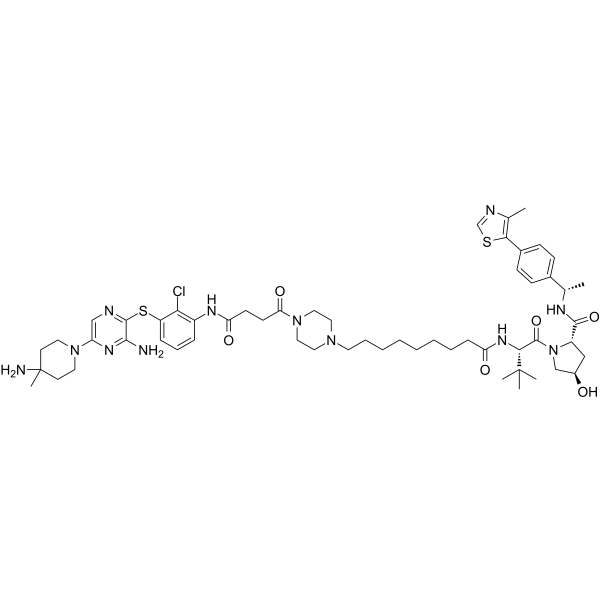 0 ImagesCat. No.: HY-145162CAS No.: 2458219-65-1SHP2-D26 is a SHP2 PROTAC degrader with DC50 values of 6.0 nM (KYSE520 cells) and 2.6 nM (MV4;11 cells), respectively. SHP2-D26 inhibits ERK phosphorylation, upregulates Bim levels, downregulates Mcl-1 levels, and induces cell cycle arrest and apoptosis. SHP2-D26 can be used in studies related to esophageal cancer, acute myeloid leukemia and non-small cell lung cancer.
-
Bim BH3, Peptide IV
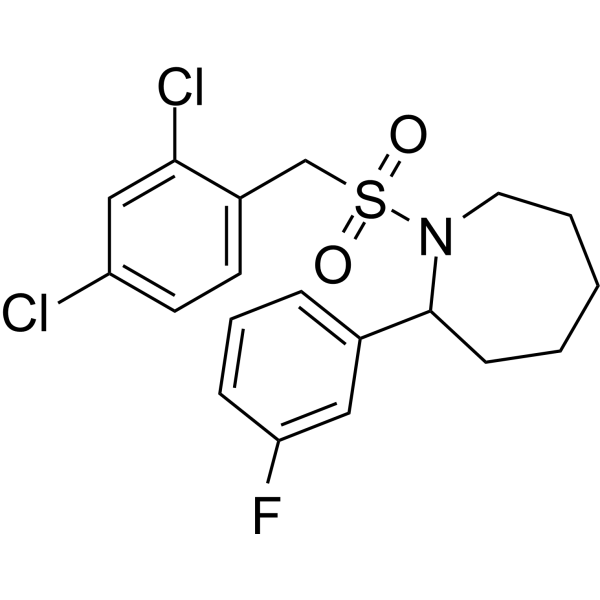
 0 ImagesBim BH3, Peptide IV is an Aβ42-binding peptide and the pro-apoptotic BH3 domain of the BIM protein. Bim BH3, Peptide IV binds Aβ42 with a Kd of 7.1 μM. Bim BH3, Peptide IV modulates Aβ42 structure, fibrillization pathways, aggregate morphology, and membrane interactions, inhibiting fibril formation while enhancing protofibril assembly. Bim BH3, Peptide IV promotes Aβ42 β-sheet formation and accelerates aggregation. Bim BH3, Peptide IV enhances Aβ42 membrane internalization and bilayer stiffening. Bim BH3, Peptide IV induces neuronal cell death by enhancing BH3-induced membrane interactions of Aβ42 prefibrillar species. Bim BH3, Peptide IV can be used for research on Alzheimer's disease.
-
Triptophenolide
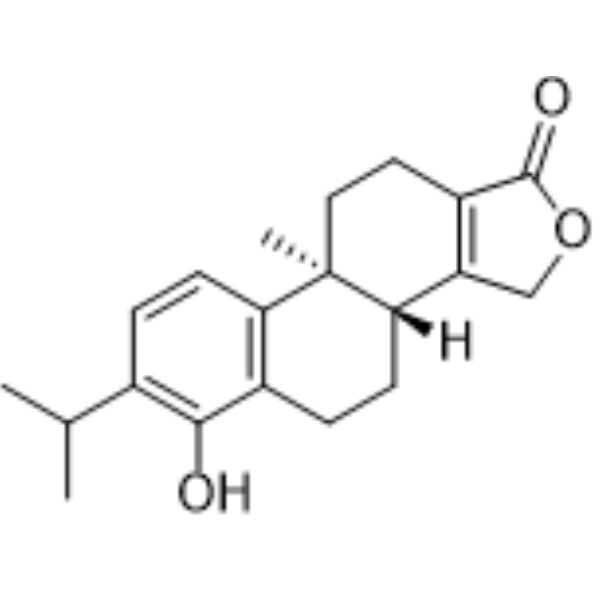 0 ImagesSynonyms: Hypolide; (+)-TriptophenolideTriptophenolide (Hypolide) is a colorless crystal isolated from the ethyl acetate extract of Tripterygium wilfordii. Triptophenolide is an orally active pan‑antagonist of the androgen receptor (AR) with an IC50 of 467 nM against human wild‑type AR. Triptophenolide reduces AR expression, inhibits AR nuclear translocation, downregulates prostate‑specific antigen mRNA levels, and suppresses the growth of AR‑positive prostate cancer cells. Triptophenolide shows anti-tumor effects against breast cancer by inhibiting cell proliferation and migration, inducing G1-phase arrest and apoptosis, repressing xenograft tumor growth. Triptophenolide inhibits pyroptosis, alleviates tissue inflammation, and ameliorates synovial injury. Triptophenolide can be used for the study of prostate cancer, rheumatoid arthritis and breast cancer.
-
JL-15-DNBS
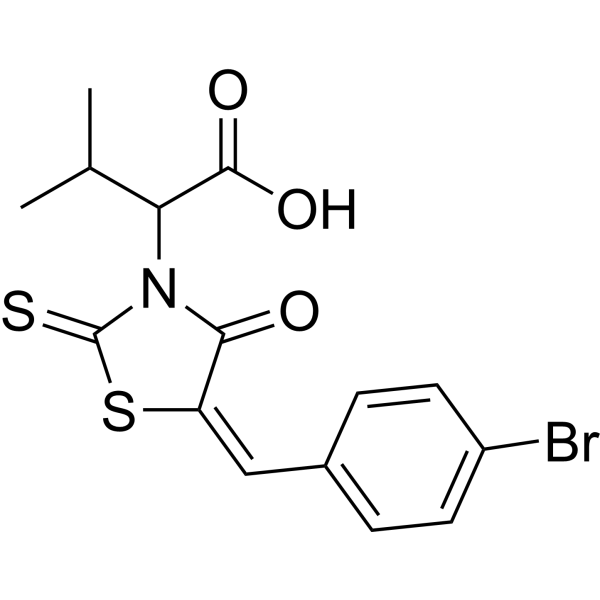
 0 ImagesCat. No.: HY-189700CAS No.: 3048341-50-7JL-15-DNBS is an Hsp70-Bim interaction disruptor. JL-15-DNBS undergoes GSH-responsive activation to release active JL-15, and GSH depletion attenuates its cytotoxicity. JL-15-DNBS downregulates the oncogenic client proteins AKT and eIF4E. JL-15-DNBS can be used for research on chronic myeloid leukemia (CML).
-
ML311
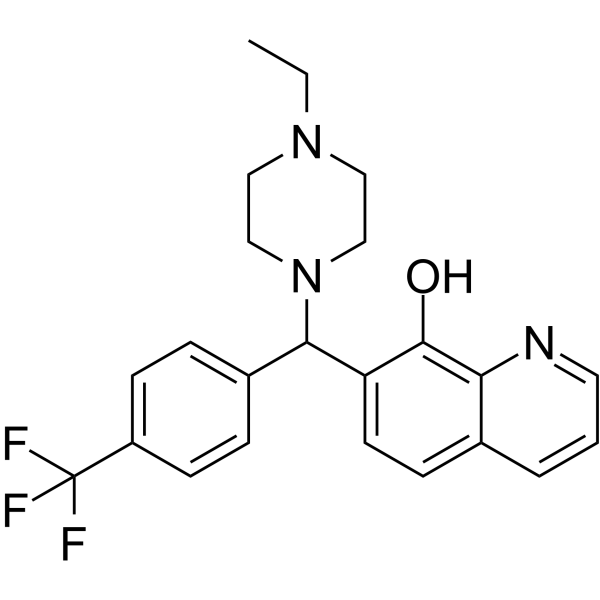 0 ImagesSynonyms: EU-5346ML311 is a potent and selective inhibitor of the Mcl-1/Bim interaction.
-
Mcl-1-IN-23
 0 ImagesCat. No.: HY-184310CAS No.: 2756736-34-0Mcl-1-IN-23 is a Mcl-1 inhibitor with a Ki value of 0.024 μM. Mcl-1-IN-23 binds directly to Mcl-1 and displaces the pro-apoptotic proteins Bak and Bim from Mcl-1 complexes. Mcl-1-IN-23 induces cell apoptosis, activates caspase-3, promotes PARP cleavage, and exerts antiproliferative activity against cancer cells. Mcl-1-IN-23 can be used for the research of leukemia.
-
Dimethyl bisphenolate
 0 ImagesCat. No.: HY-180820Dimethyl bisphenolate (Compound DMB) is a natural neolignan derivative with orally active anti-tumor activity. Dimethyl bisphenolate can inhibit cancer cells proliferation, invasion and migration. Dimethyl bisphenolate can activate the p53 signaling pathway, upregulate the expression of p21 protein, inhibit the activity of the CDK1-cyclin B1 complex, and cause cells to stall at the G2/M phase. Dimethyl bisphenolate can induce ROS production, upregulate pro-apoptotic proteins Noxa and Bim, downregulate anti-apoptotic protein Bcl-2, activate caspase-9 and caspase-3, and ultimately induce cell apoptosis. Dimethyl bisphenolate can be used for research of glioblastoma.
-
Bim BH3, Peptide IV TFA
 0 ImagesCat. No.: HY-P1889ABim BH3, Peptide IV TFA is an Aβ42-binding peptide and the pro-apoptotic BH3 domain of the BIM protein. Bim BH3, Peptide IV TFA binds Aβ42 with a Kd of 7.1 μM. Bim BH3, Peptide IV TFA modulates Aβ42 structure, fibrillization pathways, aggregate morphology, and membrane interactions, inhibiting fibril formation while enhancing protofibril assembly. Bim BH3, Peptide IV TFA promotes Aβ42 β-sheet formation and accelerates aggregation. Bim BH3, Peptide IV TFA enhances Aβ42 membrane internalization and bilayer stiffening. Bim BH3, Peptide IV TFA induces neuronal cell death by enhancing BH3-induced membrane interactions of Aβ42 prefibrillar species. Bim BH3, Peptide IV TFA can be used for research on Alzheimer's disease.
-
ICD inducer-2
 0 ImagesCat. No.: HY-181673CAS No.: 3069681-35-9ICD inducer-2 is a immunogenic cell death inducer. ICD inducer-2 binds to the colchicine binding site on tubulin to inhibit tubulin polymerization. ICD inducer-2 exhibits broad-spectrum antiproliferative activity across multiple cancer cell lines. ICD inducer-2 inhibits cells migration, causes G2/M phase and induces apoptosis. ICD inducer-2 promotes infiltration of CD4+ and CD8+ T cells into the tumor microenvironment. ICD inducer-2 downregulates antiapoptotic protein Bcl-2, upregulates proapoptotic proteins Bax and Bim-1, and increases cleaved caspase 3, cleaved caspase 9, and cleaved PARP levels. ICD inducer-2 overcomes paclitaxel resistance in xenograft models and achieves tumor growth inhibition. ICD inducer-2 can be used for the research of cancer, such as lung carcinoma.
-
Apoptosis inducer 50
 0 ImagesCat. No.: HY-179052Apoptosis inducer 50 (Compound 5e) is an apoptosis inducer as well as an autophagy inducer agent. Apoptosis inducer 50 exhibits potent and selective anti-cancer activity against triple-negative breast cancer cells and metastatic colon cancer cells. Apoptosis inducer 50 upregulates the expression of pro-apoptotic proteins (Bax, Bim, cleaved Caspase-9) and downregulates the expression of the anti-apoptotic protein (BCL-XL). Apoptosis inducer 50 upregulates key autophagy markers such as Beclin-1 and ATG5, and enhances the conversion of LC3-I to LC3-II., Apoptosis inducer 50 arrests cancer cells in the G1/S phase by upregulating the expression of p21 and p27 while downregulating Cyclin D1. Apoptosis inducer 50 increases the level of ROS.
-
NGI-189
 0 ImagesNGI‑189 is a selective OST‑A inhibitor. NGI‑189 inhibits the STT3A catalytic subunit of the OST complex and reduces N‑glycosylation of target glycoproteins. NGI‑189 blocks oncogenic and bypass signaling, reduces phosphorylation of EGFR, AKT, p70S6K and S6RP, and induces cell cycle arrest and apoptosis. NGI‑189 markedly suppresses tumor growth and induces tumor regression in non‑small cell lung cancer (NSCLC) xenograft models. NGI‑189 can be used for the research of EGFR‑mutant non‑small cell lung cancer.
-
Triptophenolide (Standard)
 0 ImagesCat. No.: HY-N0475RCAS No.: 74285-86-2Synonyms: Hypolide (Standard); (+)-Triptophenolide (Standard)Triptophenolide (Standard) (Hypolide) is the analytical standard of Triptophenolide (HY-N0475). This product is intended for research and analytical applications. Triptophenolide is a colorless crystal isolated from the ethyl acetate extract of Tripterygium wilfordii. Triptophenolide is an orally active pan‑antagonist of the androgen receptor (AR) with an IC50 of 467 nM against human wild‑type AR. Triptophenolide reduces AR expression, inhibits AR nuclear translocation, downregulates prostate‑specific antigen mRNA levels, and suppresses the growth of AR‑positive prostate cancer cells. Triptophenolide shows anti-tumor effects against breast cancer by inhibiting cell proliferation and migration, inducing G1-phase arrest and apoptosis, repressing xenograft tumor growth. Triptophenolide inhibits pyroptosis, alleviates tissue inflammation, and ameliorates synovial injury. Triptophenolide can be used for the study of prostate cancer, rheumatoid arthritis and breast cancer.
-
FLLL12
 0 ImagesCat. No.: HY-183402CAS No.: 917813-60-6Synonyms: GO-Y026FLLL12 (GO-Y026) is a curcumin analog anticancer agent. FLLL12 inhibits the phosphorylation of AKT, Bcl-2, Bid, EGFR, mTOR, FOXO1a, FOXO3a, STAT3, HER2/neu, as well as pancreatic AKT/STAT3; upregulates the expression of Bim and DR5; and activates PTPs. FLLL12 regulates downstream pathways, induces mitochondria-mediated and DR5-dependent extrinsic apoptosis, inhibits cancer cell viability, proliferation, anchorage-independent growth and migration, and exerts a synergistic effect with Doxorubicin (HY-15142A). FLLL12 can be used in research related to head and neck squamous cell carcinoma, breast cancer, prostate cancer, pancreatic cancer, lung cancer, colon cancer and colorectal cancer.
- 1




